Genetic Modification is a special set of technologies that alter the genetic makeup of organisms such as animals, plants, or bacteria. While some genetic modification has been done in the aquaculture business, the vast majority of fish available to the American public has not been genetically modified. Inherently, wild caught fish are free from genetic modification.
Since all of Crown Prince’s fish are wild caught, there is no danger that there are any GMOs in our products. We do pack two cultivated shellfish – shrimp and oysters, but these have not been genetically modified. Crown Prince packs our products in simple packing mediums, none of which contain GMOs.
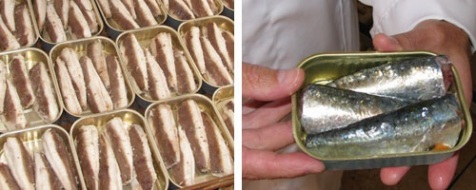
Crown Prince Seafood: Natural sardines, packed fresh.
Crown Prince is proud of providing simple, whole foods to our American consumers. Canned fish is not a manufactured product, but is wild harvested from the oceans of our planet. Our customers can be assured that Crown Prince only offers the best that our oceans can provide – unadulterated by genetic modification.
If you like what you’re reading on the Crown Prince Seafood blog, please come back often. You can also subscribe to our RSS feed, follow us on Facebook or Twitter, or contact us directly. We look forward to hearing from you.
Spruce up your spring menu plan and add some wild salmon to your next shopping list. It’s a seafood choice that we already know to be good for the heart due to its omega-3 fatty acid content—but new research shows that its high antioxidant content may be another reason for its powerful health benefits.
Astaxanthin is the name of the antioxidant getting a lot of attention these days (it was featured on the Dr. Oz Show earlier in the year), and it’s the chemical responsible for giving wild salmon its beautiful pink-orange hue. The antioxidant reduces oxidation of our cells (i.e. aging), especially related to the eyes, skin, joints and central nervous system. Eat foods with astaxanthin; sustain the body and reduce inflammation.
Wild salmon is particularly rich in astaxanthin because of the animal’s natural diet and lifestyle in the wild—it contains about 4 times the content than farmed salmon! In fact, farmed salmon is so devoid of antioxidants that its flesh is an unappealing greyish color, so manufacturers actually enhance the color with supplements and dyes.
We’re proud to offer wild salmon available in three varieties: Smoked Coho Salmon, Alaskan Pink Salmon, and Skinless and Boneless Pink Salmon. All varieties are wild-caught salmon coming from Alaskan waters, where the fisheries are sustainably managed. Eat happily, knowing you’re getting a heart-healthy product in every bite.
If you like what you’re reading on the Crown Prince Seafood blog, please come back often. You can also subscribe to our RSS feed, follow us on Facebook or Twitter, or contact us directly. We look forward to hearing from you.
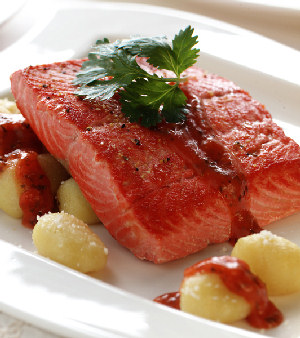
No longer is ecology relegated to college classrooms and elementary school Earth Day activities. These days, ecological implications weigh heavily in many people’s daily decision-making process, from the cars they drive to the food they feed their families.
As long-time providers of high quality wild-caught seafood, we’ve seen a huge shift in societal focus, even in the past decade.
Comparing Proteins: Not All are Created Equal
Professor Ray Hilborn, Ph.D., works at the University of Washington’s School of Aquatic and Fishery Sciences and is a global leader in fisheries research. Dr. Hilborn has been researching the ecological implications of wild-caught seafood compared to other leading protein sources (namely farm-raised chicken and beef).
His conclusions are striking. Comparing the amount of carbon produced, the natural resources consumed, and the impact on nearby ecosystems per pound of food, wild seafood always came out better than conventional livestock.
Read more about Dr. Hilborn’s findings in Earth Easy’s feature about his work.

Keeping Your Kitchen Sustainable
Crown Prince is proud to provide canned seafood that is part of a healthy diet for our customers. To learn more about our products, visit CrownPrince.com and click “Sustainability.”
If you like what you’re reading on the Crown Prince Seafood blog, please come back often. You can also subscribe to our RSS feed, follow us on Facebook or Twitter, or contact us directly. We look forward to hearing from you.
Global Spotlight Series: Next Up….
Each quarter, we choose a different destination from around the globe, highlighting one-by-one the rich and diverse countries from which our products are sourced. Previously, our virtual journeys have taken us to Morocco and Scotland.
This is the Crown Prince Global Spotlight Series, which is now in its third successive quarter and ready to take you to your third—and fourth—countries. That’s right! For the next few months, we’ll be spotlighting not just one, but two countries: China and South Korea.
 |
 |
Guess the Species: Coupon Contest
These countries provide the world with a fantastic selection of seafood. From China, Crown Prince provides:
- Boiled Baby Clams / Smoked Baby Clams
- Mackerel
- Ocean Prince Oval Tomato Sardines
From both China and South Korea we source a single species that, prepared two different ways, has always been a favorite.
Can you guess the species?
A few hints:
- Sardines, anchovies, clams and mackerel have already been covered.
- We’re thinking of a mollusk.
- This species makes an appearance in Lewis Carroll’s Through the Looking Glass (and Disney’s Alice in Wonderland).
Think you know the answer? Leave your guess in the comments. We’ll share the correct answer in our next Global Spotlight Series post, and those who post the correct answer on or before May 15, 2011 will receive a coupon for $1 . (Make sure to include a valid email address when you post your comment. Your email address will NOT be displayed publicly, but if you are correct we will need to contact you to ask for your mailing address.)
If you like what you’re reading on the Crown Prince Seafood blog, please come back often. You can also subscribe to our RSS feed, follow us on Facebook or Twitter, or contact us directly. We look forward to hearing from you.
Green Team Tip: Recycling Plastic Bags
Did you know it’s Earth Week? If you haven’t already pledged your Act of Green, head over to EarthDay.org and do so now.
When we blogged about the Crown Prince Green Team in February, we shared several initiatives that our Green Team has been pursuing since its formation in 2008. These initiatives ranged from electricity reduction, carbon disclosure, “Back to the Tap” water pledges and tree planting.
Last week the entire company participated in a sustainability seminar geared at identifying ways that Crown Prince as a company can reduce our carbon footprint on the environment. Although this movement starts with us, we are hoping to encourage our trading partners and consumers to join in.
Our most active initiative is that of education. Each week, the Green Team shares green-living tips giving the entire Crown Prince team advice on healthier, greener living both at work and at home. We’ve been sending these emails internally since July 2008, and we can only imagine the many small (or not so small) changes that have come as a result.
Spreading the Word
So, we thought, why not share this information with our blog readers? Especially in honor of Earth Week, here’s a rundown of the information from our most recent Green Team email update:
Many types of plastic bags can be recycled: from grocery and newspaper bags to cereal box liners and furniture wrap. Find a full list here.
 |
 |
Though often too light for curbside recycling, many plastic bags are collected at grocery and retail stores. This includes major retailers such as Target, Best Buy and Lowes Home Improvement.
When recycled, plastic bags can be turned into all sorts of things: while composite lumber is most common; crates, pipes, new bags, pallets and pellets are also made of recycled plastic bags. Plastic bags can also be made into great art:
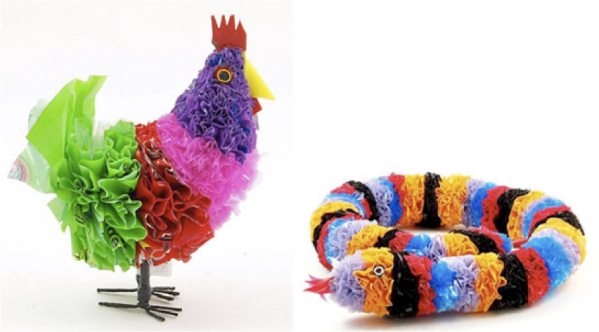
Recycled Plastic Bag Animals (available for purchase at WOW Imports, or better yet, create your own!)
The trick to recycling plastic bags at home is to remember to take them with you to the store. Try writing “bring plastic bags” at the top of your grocery list. To collect the bags in your house, hang a canvas bag over the doorknob and place emptied plastic bags in it for easy transport when you’re ready to go.

Canvas Shopping Bag (available for purchase at cafepress.com)
So, what will your small change be? Share in the comments, or follow us on Facebook. Oh, and Happy Earth Week!
If you like what you’re reading on the Crown Prince Seafood blog, please come back often. You can also subscribe to our RSS feed, follow us on Facebook or Twitter, or contact us directly. We look forward to hearing from you.
A Special Note from Our Customer
Here is a note from out customer who was kind enough to give us back a piece of Crown Prince history:
Thanks for the note. When I found the Wooden Crown Prince Whole Abalone box in my dad’s garage, and I noticed your company is located just 20 minutes away. So I thought you folks should have this piece of history. As you know, they don’t use wooden boxes/crates any longer and I can’t recall the last time I saw “whole” abalone in a can. I was glad to put it in the right hands, a slice of Americana for the Crown Prince people. Enjoy!
I like smoked oysters & kippered snacks. It’s very kind of you to send one of your nice seafood products.
John Z.
Santa Ana, CA

Announcing: New Product and Whole Foods Promotion!
Crown Prince is excited to announce a new addition to our line of high-quality canned seafood: Crown Prince Natural Pole Caught Yellowfin Tuna.
A Special Kind of Tuna
This Yellowfin tuna is sustainably harvested and pole caught, meaning there is no by-catch whatsoever. Like all of our tuna, it is certified Dolphin Safe by the Earth Island Institute. This product is low in sodium, has a low mercury content, and is an excellent source of low-fat protein.

What really sets Crown Prince Natural Pole Caught Yellowfin Tuna apart is the way it is prepared. Typically, canned tuna is cooked fully before canning, and then heated again when the can is retorted. But with our single-cook method, the fresh tuna is placed directly in the can, where it is cooked and retorted in a single process. This method is believed to better retain natural nutrients and flavor. In addition, our Pole Caught Yellowfin Tuna is packed in BPA free cans.
Look For Us at Whole Foods

If you shop at Whole Foods Market, you’ve probably seen a number of our products on the shelves. To celebrate the addition of Crown Prince Natural Pole Caught Yellowfin Tuna to our lineup, Whole Foods will be running a National promotion on this product in May.
Look for us in “The Whole Deal,” Whole Foods’ weekly in-store flyer, as well as shelf signage at participating stores.
We couldn’t be more excited about the addition of Pole Caught Yellowfin Tuna to our product lineup – so please join us, and Whole Foods, in celebrating this wonderful, eco-friendly tuna.
If you like what you’re reading on the Crown Prince Seafood blog, please come back often. You can also subscribe to our RSS feed, follow us on Facebook or Twitter, or contact us directly. We look forward to hearing from you.
A Message to Our Customers about the Crisis in Japan
With concerns of food safety since the earthquake and tsunami in Japan, Crown Prince would like to assure that our products are safe for consumption. Here is a personal message from our President, Dustan Hoffman:
As the effects of the earthquake and tsunami in Japan are still unfolding, Crown Prince wants to assure our customers that we are monitoring the situation closely. Be assured that all of the canned seafood from Crown Prince currently on the shelves and in our warehouses was packed prior to the earthquake and therefore safe for consumption.
Crown Prince products do not contain any ingredients derived from Japan.
We have been in close contact with all of our suppliers in the affected region and surrounding areas. Our suppliers and the governments in those countries are monitoring the radiation levels. At this time, the fishing areas have not been affected.
The quality and safety of our products are of the utmost importance to Crown Prince so be assured we will continue to keep a close eye on this situation. If anything changes, we will notify you.
Crown Prince would like to again send our heartfelt thoughts and condolences to the Japanese people. They have been brave and an inspiration to us all. In the midst of this tragedy they have pulled together as a community and a country in a calm, organized and peaceful manner. What an incredible example of what can be accomplished when we work together as one.
We appreciate your continued trust and patronage.
For additional information:
Public Health Focus: Radiation Safety
http://www.fda.gov/NewsEvents/PublicHealthFocus/ucm247403.htm
Or, visit a special page on our website:
http://www.crownprince.com/Seafood-Radiation-Safety-ASMI-Mar-2011.pdf
Oh the Places We’ve Gone
If you’re a regular reader of this blog, you’ve now followed us on two journeys through our Global Spotlight Series. This series explores one country or region each quarter, allowing Crown Prince Seafood to introduce our customers to the unique places our high quality products are sourced, and our seafood gets from the water to your table.
First we explored Morocco, where we source sardines and anchovies:

Morocco's culture and traditions are rich, vibrant and diverse (Photo by Dustan Hoffman / Crown Prince)
Next we headed far north to the icy waters of Scotland, where we source Brisling sardines:

Plockton, on the western coast of Scotland. Photo rights: Dustan Hoffman / Crown Prince
This post wraps up our Scotland series, which has included:
1. Grab Your Kilt – We’re Going to Scotland!
2. From the Cool Scottish Lochs: The Brisling Sardine’s Journey
3. Scotland, Continued: Getting to Know the Brisling Sardine
What’s Next?
Don’t worry, we can’t ignore the ‘travel bug’ for long. This next quarter we take you not to just one country, but two. Are you ready? Stay tuned to find out where we’re going next.
If you like what you’re reading on the Crown Prince Seafood blog, please come back often. You can also subscribe to our RSS feed, follow us on Facebook or Twitter, or contact us directly. We look forward to hearing from you.
Scotland, Continued: Getting to Know the Brisling Sardine
Crown Prince sources just one type of fish from Scotland, and it’s a special one: the Brisling Sardine. This tiny fish is just a small part of Scotland’s seafood exports, but it’s very important to the local communities of fishermen and canners we work with. Not to mention those of us who love to eat them!
All Sardines Are Herrings, But Not All Herrings Are Sardines
It’s true! Biologically speaking, sardines belong to the herring family (Clupeidae). The Brisling Sardine (also known as Sprattus sprattus) is one of 170 species in that family. We recommend using this fact to impress acquaintances at your next cocktail party—perhaps over a nice seafood appetizer!

Scotland’s scenic Castle Urquhart. Photo rights: Dustan Hoffman / Crown Prince
The Flavor Factor
As you know from our last post, the flavor in our sardines begins in the water, when they’re caught during the winter months for optimum texture and flavor, then transported to the cannery in Fraserburgh.
There, the sardines are soaked in a light brine and then kiln-smoked over a mixture of oak, beech and Douglas fir. The result is a subtle and authentic smoky flavor that plays well off the natural richness of the fish.
Finally, the sardines are hand-packed in an interleaved pattern to create a pleasant appearance when you open the can. Crown Prince Brisling Sardines are packed in oil, tomato, mustard or purified water.

Brisling Sardines Photo rights: Dustan Hoffman / Crown Prince
Get Cooking!
Of course, the best part about sardines is eating them. Crown Prince Brisling Sardines lend themselves to salads, pastas, appetizers and entrees alike. If you’re new to cooking with sardines, we’d suggest starting with our Baked Ziti and Sardines recipe (pictured below). It’s a classic Italian dish with spices, sauce, cheese and a hint of seafood. You really can’t go wrong!

Baked Ziti and Sardines
If you’re feeling a bit more decadent, go for the Broiled Sardines with Lemon and Cilantro Vinaigrette. With zesty citrus and herbs, fresh onions and succulent broiled sardines, this dish is great with rice or a fresh green salad.

Broiled Sardines with Lemon and Cilantro Vinaigrette
You can find more great recipes on our Seafood Recipes page.
If you like what you’re reading on the Crown Prince Seafood blog, please come back often. You can also subscribe to our RSS feed, follow us on Facebook or Twitter, or contact us directly. We look forward to hearing from you.


 Crown Prince Seafood Blog