National Breast Cancer Awareness Month: Do Your Part
October is National Breast Cancer Awareness Month. With over 250,000 cases diagnosed in 2010, breast cancer is one of the most common cancers in the United States. However, it is also the recipient of unprecedented visibility, awareness, and research. Since its inception in 1982, the Susan G. Komen for the Cure organization has invested over $1.9 billion toward breast cancer research, largely thanks to community events held nationwide.

Aside from fundraising involvement, you can do your part by keeping yourself personally educated about breast cancer- for the sake of both yourself and your loved ones.
For Your Health: Tips Regarding Breast Health and Well-Being
Awareness: The earlier breast cancer is found, the easier it is to treat.
- Give yourself a monthly breast exam. For guidance, see Breastcancer.org’s easy-to-use tutorial: The Five Steps of a Breast Self-Exam.
- Visit your doctor for regular examinations. The American Cancer Society (ACS) recommends clinical breast exams every 3 years for women in their 20s and 30s, and yearly mammograms beginning at age 40.
- Alternative screening: Breast Thermography is a medical infrared imaging used in breast cancer and early detection. Read more about it here: http://www.breastthermography.com/
Health: “Stay Healthy” is one of the American Cancer Society’s primary areas of focus.
- Take care of your body with good nutrition. Keeping healthy foods around the house is a great way to make sure that smart choices are easy choices. Canned vegetables, whole grains, beans, rice, canned seafood, and olive oil (the last two of which contain healthy omega-3s) are all on ACS’s “In the cupboard” list.
- Exercise! A healthy lifestyle includes regular exercise. A fit body is strong, balanced, resilient, and better equipped to handle any challenges that come your way.
For more information on a healthy lifestyle, see the ACS Guidelines on Nutrition & Physical Activity for Cancer Prevention.
Skinless, Boneless, Wild-Caught Alaskan Pink Salmon
In addition to the tasty Smoked Coho Salmon we get from the crisp waters of Alaska, we also source Skinless & Boneless Pink Salmon – another customer favorite.
In the Water
Pink salmon is a wild and plentiful species in the Pacific Ocean. After hatching in Alaska’s rivers, the salmon make their way out to sea, where they eat natural foods in the ocean for two years. They are harvested when they weigh between 2.5 and 4 pounds, before they return to the rivers to spawn.

The breathtaking Alaskan coast, via Creative Commons
Alaska’s wildlife is very important to the state, and the Alaska Department of Fish and Game (ADFG) is extremely strict about the times and locations when salmon can be harvested. This allows the population to stay at a strong and healthy level.
We’re proud that our Alaskan partners are fully compliant with the ADFG, and that our wild-caught pink salmon is recognized by the Marine Stewardship Council as a Certified Sustainable Seafood.
In the Can
Caught by net, our pink salmon is transported from the fishing vessel to the canning facility in chilled water, so it is fresh, never frozen. At the facility, the salmon is cut and cleaned, and its skin and bones are carefully removed before canning for a pure, premium product. 
Crown Prince Skinless & Boneless Pacific Pink Salmon is an excellent source of protein and provides 235 mg of omega-3 per serving.
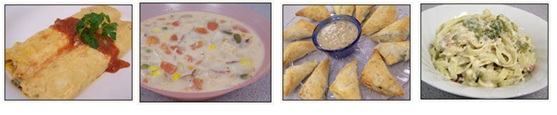
Its texture and flavor are fantastic straight out of the can, making it a great choice for recipes including:
 |
Visit our website for more canned salmon recipes – and happy cooking!
If you like what you’re reading on the Crown Prince Seafood blog, please come back often. You can also subscribe to our RSS feed, follow us on Facebook or Twitter, or contact us directly. We look forward to hearing from you.
Alaskan Coho Salmon – In the Can, In your Kitchen
Now that you know why wild-caught Coho salmon are such great fish, let’s take a peek inside the canning facility where the fish are prepared.
When the salmon are unloaded from the fishing vessels to our packer in Alaska, they are immediately filleted by hand and have their bones and fins removed. Crown Prince was among the first seafood companies to provide skinless boneless salmon for the home cook.
From there, the clean fillets are lightly brined and put into a wood-chip smokehouse. They are lightly smoked over alder wood to impart subtle flavor and temper the texture just so.
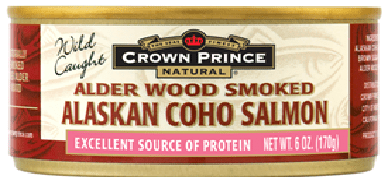
The salmon is hand-cut and hand-packed into cans, and then steamed inside the can. Our Coho salmon is steamed in its own juices and oils; after all, it’s difficult to enhance Mother Nature. The cans are then sterilized, inspected, and labeled – then shipped off, soon to reach your grocery store and kitchen.
In the Kitchen
Put this delicious fish to good use! Here are a few of our favorite recipes that feature Crown Prince Natural Smoked Alaskan Coho Salmon:
- Savory Wild Salmon-Dill Cheesecake. A savory twist on a rich and creamy favorite, this cheesecake makes a great appetizer! http://crownprince.com/recipes-salmon-dill-cheesecake.htm
- Smoked Wild Salmon Pinwheels. Excellent for entertaining, this is finger food done right. http://crownprince.com/recipes-smoked-salmon-pinwheels.htm
- Smoked Salmon, Asparagus and Avocado Salad. Who says veggies should get all the glory? This trio of asparagus, avocado and smoked salmon is perfectly balanced and delicious any time of year. http://crownprince.com/recipes-smoked-salmon-salad.htm
Clean up the Coast this Saturday!
This coming Saturday from 9 a.m. to noon, folks the world over are rolling up their sleeves to help make our planet’s coasts cleaner. Each September, this international emphasis on clean coasts reaches from rocky Nordic crags to sunny southern sands. Hundreds of thousands of people participate. You should too!
The nonprofit Ocean Conservancy has spearheaded international coastal cleanup for the past 25 years. What really sets this work apart is that the collected trash isn’t just disposed of. It is categorized and logged, piece by piece.
Tracking the types of trash threatening our waters helps researchers, environmental advocates and policy makers take informed action to address the most threatening sources of waste and marine debris.
Learn more about the Ocean Conservancy’s work at their Trash Free Seas page, then sign up to help out at a coastal cleanup near you! (Our friends and neighbors here in California will be working directly with the California Coastal Commission.)
Hope to see you out there this Saturday, September 16th!
Pacific Coho Salmon – Wild, Fresh & Delicious
This is Part II of our Global Spotlight on Alaska. If you’re just joining us, read Part I: Sustainable Salmon from Alaska to You.
Among Pacific salmon, the Coho salmon is a particularly fine fish. This fish is rich in flavor, color and texture and is very well-suited to canning.
The salmon we use
The fourth most plentiful Pacific-dwelling salmon, Coho populations are found off the coasts of both North America and Asia, although the two tend to stay separate.
Unlike their southern cousins in the Pacific Northwest, most Alaskan salmon populations are thriving. A variety of circumstances, including favorable ocean conditions, healthy river habitats, and improved management have contributed to robust populations.
Our Smoked Alaskan Coho Salmon are caught using large fishing boats equipped with a purse seine net. Once on the boat, they are kept in cold seawater (fresh water for no-salt-added products) for transport to the cannery. This provides optimum freshness, flavor and texture.

Did you know?
- Coho salmon can age to seven years old
- Like all Pacific salmon, Coho salmon die after spawning
- Salmon is delicious!
If you like what you’re reading on the Crown Prince Seafood blog, please come back often. You can also subscribe to our RSS feed, follow us on Facebook or Twitter, or contact us directly. We look forward to hearing from you.
Resources:
http://www.nmfs.noaa.gov/pr/species/fish/cohosalmon.htm
http://fish.washington.edu/research/highseas/known_range.html
http://www.iser.uaa.alaska.edu/iser/people/knapp/usmark02.htm
Crown Prince Helps Canstruction Fight Hunger – One Can at a Time
After supporting Canstruction in New York City last fall, we couldn’t be more excited to get involved here in our own backyard! Crown Prince is proud to have donated 550 cases (6,600 cans) of Crown Prince Fancy White Crab Meat to Canstruction Orange County for the design built by the Fashion Institute of Design & Merchandising (FIDM).
What is Canstruction?
Canstruction is an international movement to fight hunger, one can at a time. For each Canstruction event, local businesses, schools and organizations build larger-than-life sculptures out of cans of nonperishable food. After public exhibition, judging, and quite a bit of fun, the food is donated to local food banks and anti-hunger organizations.
Canstruction Orange County takes place each September in conjunction with the Festival of Children. This year’s 14 sculptures consist of 90,000 cans – that’s 60,000 pounds of food that will be donated to the Orange County Food Bank!
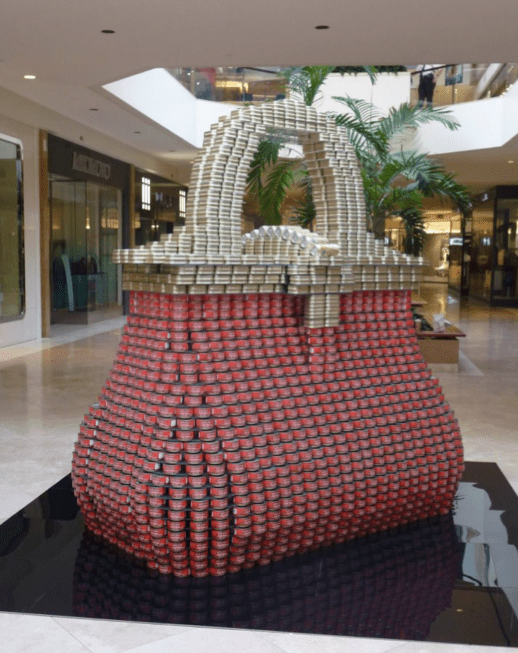 Click image to see video
Vote for “Lending a Hand to Bag Hunger” on Facebook
Want to participate?
- Make a financial donation to the Orange County Food Bank
- Find a food bank near you via Ample Harvest, Feeding America or FoodPantries.org
- Head to South Coast Plaza in Costa Mesa, CA, before September 25 to see the sculptures in person!
- ‘Like’ Canstruction Orange County on Facebook and vote for your favorite sculpture.
- Find out when Canstruction is coming to a city near you
September is National Food Safety Education Month
It’s hard to believe it’s September already! Did you know that this month is National Food Safety Education Month (or NFSEM)?
NFSEM is driven by the National Restaurant Association, so it is largely aimed at the restaurant and food service industries. But food safety affects us all, so we thought we’d take a moment to remind you about food safety in your own home –specifically as it relates to canned seafood (which, of course, happens to be our specialty).
Canned Seafood, Food Safety, and You
Crown Prince canned seafood products are prepared in FDA approved and inspected facilities, which are also under the watchful eye of national and state health officials, as applicable by region. We’re proud to work only with partners who uphold the highest standards of safety and health for both our food and the skilled workers who prepare it.
Our products are shelf stable. As long as the can is not bulging, leaking, or expired, a Crown Prince product is ready to eat whenever you need it. This makes us a great choice for disaster preparedness kits, which rely on shelf-stable, nutrient dense foods that are convenient to store and require little or no preparation to eat. As a bonus, our products are far tastier than most non-perishables.
This month, give a nod to National Food Safety Education Month by taking an hour or two out of your schedule to check for damaged food in your own fridge or pantry. And if you don’t have a disaster preparedness kit, then now is the perfect time to start one. For more advice on what to put in your kit, use this checklist from Ready.gov.
If you like what you’re reading on the Crown Prince Seafood blog, please come back often. You can also subscribe to our RSS feed, follow us on Facebook or Twitter, or contact us directly. We look forward to hearing from you.
Sustainable Salmon From Alaska to You
For our next installment of the Crown Prince Global Spotlight Series, we head to Alaska. The northernmost of the fifty United States, Alaska has a long history of fishing and a deep appreciation for good seafood.
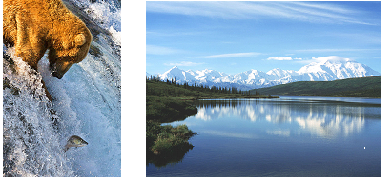
Grizzly bear fishing for salmon (by Dmitry Azovtsev via Wikimedia Commons); Mount McKinley and Wonder Lake, Denali National Park, Alaska (via Wikimedia Commons)
If you’re eating any of our salmon, you’re enjoying wild-caught, sustainably-harvested, hand-packed salmon sourced from the chilly Pacific waters off the Alaskan coast. We choose our partners very carefully, and the Smoked Coho Salmon seafood packer we work with in Alaska is a micro-cannery specializing in high-quality, shelf-stable seafood products.
Our Smoked Coho canning partner runs an especially green operation. The heat the cannery generates is re-circulated throughout the facility so that no fossil fuels are used to keep the building warm (this is no small feat in Alaska!) And instead of throwing away fish scraps left over from processing, our packer smokes and cooks down the remaining pieces, creating a 95% protein dog treat.
If you love salmon, love Alaska, and love Alaskan salmon, then this leg of the Global Spotlight journey may just be your favorite yet. Stay tuned for more!
If you like what you’re reading on the Crown Prince Seafood blog, please come back often. You can also subscribe to our RSS feed, follow us on Facebook or Twitter, or contact us directly. We look forward to hearing from you.
Sustainable Shopping? It’s In The Bag
Our offices are located in City of Industry, California, part of Los Angeles County. The county has joined others throughout the state in imposing a plastic bag ban on retailers. The ban prohibits retailers from distributing plastic bags to their customers. Customers are encouraged to bring their own reusable bags when they shop, or paper bags can be purchased for $.10 apiece.
The goal: reduce landfill waste and overall litter. No matter where you are in the country, it’s not uncommon to see a deserted plastic bag in a ditch or corner of a parking lot, or caught in a farm fence along the Midwestern interstate.

“The Green Thing”
While discussing the ban, we were reminded of an email forward that circulated our office not too long ago.
In the story, an older woman goes shopping without a reusable bag, and a young clerk challenges the woman’s generation for not having “the green thing.” But was that so bad? The woman grew up in an era where glass bottles were returned to the store for cleaning and reuse, where clothes lines and staircases were more prevalent than washing machines and escalators, where lawn mowers were push-powered and fountain pens were refilled rather than disposed of. The list goes on.
While improvements like energy efficiency and green manufacturing have certainly been positive change, there are plenty of ways in which returning to pre-“green thing” practices would actually be a move in the right direction, because they preempt the waste that prompted the need for greening in the first place.
Sustainable Seafood
As a company founded in 1948 and rooted in our local community, Crown Prince is proud to both outdate the green movement, and to be on the leading edge of modern sustainability. Visit our website for more information on our sustainable seafood practices.
Special thanks to our Green Team, whose company e-newsletters not only inspired this post, but give our whole team great tips and reminders on how we can continue to live more sustainably, both in the office and at home.
Balancing Your Diet – One Plate at a Time
Americans, say goodbye to the pyramid and hello to the plate! The USDA’s infamous “Food Pyramid”, less time-tested than the Egyptian monuments the shape is better known for, has been officially replaced by My Plate. Really, what could be more appropriate for representing the food we eat?
This new nutritional teaching tool focuses less on the number of servings eaten within each food group and more on proportion between the groups.

The image quickly says it all. Make sure half of your meal is produce – fruits and vegetables. Use dairy to augment your primary categories – not as a staple or main ingredient.
Eating Better Protein
Protein doesn’t need to be the focus of a meal to be a star. The USDA recommends protein sources that are low in fat, low in added salt, and generous in healthy omega-3 fatty acids. These tend to deliver excellent flavor for the calories.
For canned seafood, the USDA recommends:
- anchovies
- clams
- tuna
- sardines
It’s not news to us (or many of our customers throughout the years) that seafood is a great addition to a healthy meal. But it’s great to see the USDA outline healthy eating in such a simple, easy-to-reference guide.
To your health!
If you like what you’re reading on the Crown Prince Seafood blog, please come back often. You can also subscribe to our RSS feed, follow us on Facebook or Twitter, or contact us directly. We look forward to hearing from you.


 Crown Prince Seafood Blog
