MDA Summer Camp
Since 1955, MDA Summer Camps have provided children with neuromuscular disease a place where they can have a fun-filled week with other kids going through the same challenges. The kids look forward to summer camp all year long. Each year, MDA sends more than 4,000 youngsters ages 6-18 to fun-filled, one week camp sessions at 80 locations nationwide. All activities are specially designed for their abilities at no cost to their families.
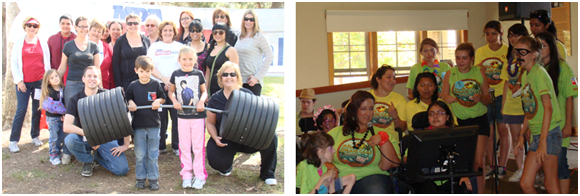
On February 25, 2012 we participated in the MDA Muscle Walk to raise money to help send kids to camp. Our team is a combined team: Crown Prince Seafood staff and the EC Riders (Southeast Los Angeles/San Bernardino Chapter of MDA Executive Committee [EC]). We were able to raise over $5,000 and send 6 kids to summer camp.
This year, the summer camp in our area took place August 19-24 at the Irvine Ranch Outdoor Education Center in Orange, CA. There were 77 excited campers along with 96 energetic volunteers and medical staff.

“I was fortunate enough to spend 2 days at camp this year and witness the pure joy and fun that each of these kids were experiencing” said Denise Hines, Marketing Manager for Crown Prince. “The kids went from one activity to the next excited to participate in all the program had to offer. On Wednesday they had a VIP day where the local businesses and firefighters who helped raise money all year were able to see up close how their hard work and dedication paid off. I spoke with a number of the firefighters who were impressed with the strength and courage that these young kids showed and how this experience has impacted them. For me personally, it really put things in perspective.
I want to thank my fellow Crown Prince employees, family and friends who through their thoughtfulness and generosity brought joy and help make lasting memories in the lives of 6 kids.”
For more information about MDA and the programs they offer, visit their website at http://mda.org/.
Around the World – and Back Again
Seafood is global: as a food, a heritage, a livelihood, and a symbol of our shared waters around the world. Through our Global Spotlight Series, we’ve used the blog to share the stories behind our products: from facts about the species and their habitats to insight into the culture and history of the people who catch and prepare them.

We believe it’s important to know where your food comes from. Over the last two years, the Global Spotlight Series has taken us on a journey:
- To Holland, for Clam Juice
- To Canada’s Bay of Fundy, for Kipper Snacks and Kipper Snacks Recipes
- To Chile, to learn about how clams live and how they are prepared
- To Alaska, for an exploration of sustainable salmon: Coho Salmon, Pink Salmon, and Skinless Boneless Pink Salmon
- To South Korea for Oysters
- To China for Clams
- To Scotland to follow the journey of our Brisling Sardines
and the journey that started it all, our travels:
- To Morocco to learn about the harvest and preparation of both our sardines and our anchovies
It’s been quite the journey, and we’ve enjoyed sharing with you the relationships and hard work with our suppliers on the ground for each of these carefully-selected, carefully-prepared (quite often by hand) seafood products.
Last Leg of the Journey
To conclude the Global Spotlight Series, we visit Thailand:
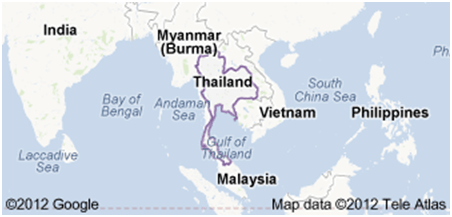
This nation of nearly 70 million people is located in Southeast Asia, in the middle of what’s known as the Indochina peninsula, separating the Bay of Bengal from the South China Sea, with the Gulf of Thailand right in the middle.
Known for its gorgeous waterways and greenery, or its grand palaces and Buddhist temples, Thailand is a popular destination for Western tourists. And it’s also the source of several of our products: crabs, clams, sardines, shrimp, and tuna.

As that product list and Thailand’s geography suggest, seafood is an important part of Thailand’s culture and economy.
Seafood and rice are Thailand’s two most plentiful exports. And culturally, both are quite popular. When Thai families dine out, it is very common for 2-3 seafood dishes to be ordered per meal.
For this last portion of our Global Spotlight Series, we will be focusing on a subset of the products we receive from Thailand: clams, crabs, and tuna.
Stay tuned for more about these amazing foods, sourced fresh and direct from our colleagues on the ground in Thailand, as our Global Spotlight Series continues.
Crown Prince Seafood is pleased to announce another annual participation in the Canstruction Orange County Event. And yes, you read that right: canstruction, not construction. The Canstruction OC Event is a fun, Orange County and internationally based community service project created by the construction and design industry as a co-effort to benefit local food banks. In the Canstruction OC event, teams of engineers, architects, contractors, and designers as well as professional mentors for students, businesses and other associations take part in a competition. Each team comes up with its own design and builds a creation entirely out of canned foods. The result? Watch this Canstruction OC video featuring the 2011 Best Meal & People’s Choice Winner “Lending a Hand to Bag Hunger.”

This year, we’ve donated our Crown Prince Fancy White Crab Meat to the 2012 Canstruction OC project. Voting officially begins for the 2012 Canstruction Orange County People’s Choice Award on Saturday, September 1, 2012. The last vote will be counted on Friday, September 14, 2012 at 5pm. Canstruction has changed this year’s voting from Facebook to an online voting site. Look for voting information on the Canstruction OC website or Facebook page this Saturday. One vote is allowed per valid e-mail address. Follow Canstruction on Facebook for updates on the voting results. The official winner will be announced at the Canstruction Awards and Fundraising Gala on Sunday, September 16, 2012.
20 teams begin building their works of art tonight! We’re excited to see how our Fancy White Crab Meat will benefit the project.
Low-Fat Diet Reduces Symptoms of Menopause
Hot flashes and night sweats are two of the most common – and most complained about – symptoms of menopause. For women looking to lessen these discomforts without (or perhaps in addition to) using hormone replacement therapy, a new study has quite encouraging news.
Led by Candyce Kroenke of the Kaiser Permanente Northern California Division of Research, the study found that menopause symptoms reduced or disappeared amongst women who lost 10 pounds by eating a diet low in fat and high in fruits and vegetables.
The healthy diet and weight loss combination positively impacted symptoms across the course of a year, the study found. And interestingly, the slight drop in weight benefited women of all sizes: those identified as within and above healthy weight both enjoyed lower symptoms when compared to the control group, who did not change their diet or weight.
Advocates of healthy eating have long recommended seafood as a healthy, low-fat source of protein, and this study is one more reason to incorporate foods such as tuna and salmon into one’s diet. Many seafood items, such as sardines, also provide heart-healthy omega-3 fatty acids. And now, with this recent study, we have reason to believe that reducing heavier, fattier meats in favor of lighter, healthier alternatives adds yet another health benefit to the long and growing list: reduced menopausal symptoms.
New & Improved Easy-Open Sardine Pouches In Stores Now!
For fans of our pouch-packed sardines, which were unveiled last fall, a great snack just got even better. These tasty, nutrient-rich morsels are now packaged in new-and-improved easy-open pouches.
Innovative Seafood Packaging
“The packaging is designed to be light in weight and minimal in material,” said Dustan Hoffman, President. “We wanted to create something that was convenient, efficient, and of the highest quality.”
We recently implemented an even more stringent packing process to ensure that the products inside would be more uniform, with firmer fish and fewer scales. Our revised packing perfects the retorting process (to make sure the fish are not over-cooked in the pouch), and the outer portion of the packing results in less direct handling of packages on their journey to grocery shelves nationwide.
National Availability, 4 Great Flavors
Crown Prince Pouch-Packed Sardines come in four delectable flavors:
- Lightly Smoked – in Soy Bean Oil
- No Salt Added – in Spring Water
- Spicy – in Louisiana Hot Sauce
- Traditional – in Mustard
They are available nationwide at Wal-Mart stores, and regionally in Kroger – Dallas, Dillons – Kansas City, King Soopers – Denver, City Markets – Colorado, Stop & Shop – New England and New York Metro, Giant – Mid Atlantic Region, and Martin’s – Mid Atlantic Region.

Sardines and Health
Our sardines are packed with heart-healthy omega-3 fatty acids, with each pouch providing 0.93 grams per serving. Each serving also offers 16 grams or more of protein, with a modest 10 grams or fewer of fat.
Between those nutritional benefits and the variety of flavors, it’s easy to incorporate Crown Prince Pouch-Packed Sardines into a meal, mid-day snack, or sustenance out on the hiking trail.
5 Tips for Lunchbox Nutrition
With back-to-school season rolling in, it’s time to once again prepare lunch boxes for your kids’ daily meals. As a parent, it’s important to ensure solid nutrition in these meals, but there’s rarely enough time in the day to go all out. Here are 5 tips for ensuring healthy mid-day meals with minimal work.
1. Get colorful.
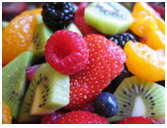
It’s easy to have 1 or 2 “go to” fruits or veggies as a side, but don’t be afraid to mix it up. Apples, bananas, berries, sliced melon, grapes, oranges, pears: the greater the variety, the better your child’s nutrition – and the more fun they’ll have seeing what’s inside each day.
2. Shape it up!
Second to food selection is getting your child to eat it. It’s amazing how far a fun shape can go. Give them a choice about their sandwiches (triangles or rectangles?), and slice vegetables into fun-shaped wedges or silly curves.
3. Cheat on PB&J.
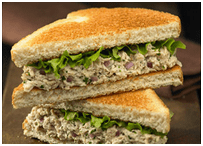
Yes, it’s a good source of protein and a childhood favorite. But variety is essential to good nutrition. Rotate between PB&J, tuna salad, deli cheese/meat, and a pita stuffed with veggies and hummus or a mild fish like kipper snacks. And try different types of bread, while you’re at it. Lunch will stay exciting and healthy.
4. Cheat on sandwiches, too.
Yes, they’re good finger food, but there’s much more out there, and there are better ways to pack in the nutrition. Whip up a batch of cold salad (such as Grape, Walnut and Tuna Tortellini Salad) at the beginning of the week and pair daily servings with fresh fruit or veggies. Voila – you’ve got a meal!
5. Make school lunch a family affair.
All of these tips apply not to just kids, but to the whole family (well, except #2… maybe), both for the sake of your nutrition and for setting a good example. If you plan for multiple lunches, it’s easier to have the right stuff on hand. Leftovers are a great way to keep it simple at the whole-family level. Making Seafood Taco Salad for dinner? Prepare a double batch and you’ve got lunch covered.
How To Raise a Healthy Teen
A new study in the journal Pediatrics finds that teenagers are less likely to be obese if they walk or bike to school and play one or more team sport. Interestingly, physical education classes were not enough physical activity to offset the trends of childhood (and thus teenage) obesity, because the activity is neither rigorous nor regular enough.
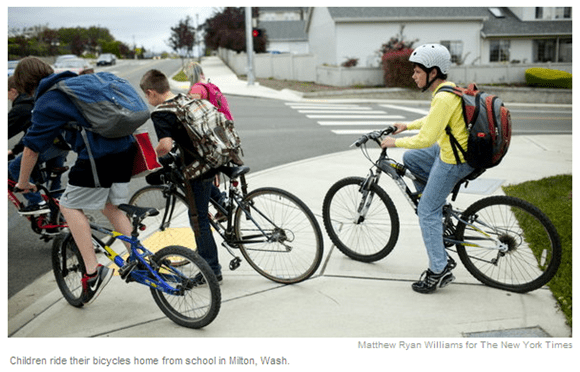
As a provider of quality canned seafood, we took notice of this report because healthy, balanced living is as important to us as it is to our customers. This study supports that the simplest, age-old advice on healthy living holds true: eat healthy and get plenty of exercise.
We encourage our customers to, whenever possible, stay active with their families, support their children’s’ involvement in physical activities, and make walking or biking to school a preferred form of commuting.
And of course, healthy eating. Seafood is known as a high-quality, low-fat source of protein, and many of our products are also generous in healthy Omega-3 fatty acids. Raising children with balanced, healthy lifestyles (and setting a good example as an adult) is one of the best things you can do to ensure they are healthy as teenagers and on through adulthood.
Earlier this month, the United States Food and Drug Administration (FDA) announced a ban on using bisphenol A (BPA) in baby bottles and cups. BPA has been used to harden plastic containers and line tin cans since the 1960s, allowing food to remain safe longer. However, there has been growing concern about the chemical, which is an endocrine disruptor; it mimics estrogen when absorbed by the body. Public concern had already pushed industry manufacturers of baby bottles and cups to move away from the chemical.
While the FDA maintains that BPA does not post a health risk, Crown Prince Seafood is dedicated to providing the safest, freshest, most sustainable seafood possible. We recognize that many of our customers prefer BPA-free canned goods.
To support this, we have over the past several years been pursuing the removal of BPA from the cans of as many of our products as possible. However, it is not always easy to do:
The Crown Prince, Crown Prince Natural, and Ocean Prince lines include product packed in eight foreign countries as well as the United States. We therefore have to work in each locality with available canning materials. Several countries from which we import are strongly influenced by European Union (EU) standards; at this time the EU does not consider the small amount of BPA in can linings a health issue.
Due to this fact many can manufacturers in these countries do not stock adequate or consistent supplies, if at all, of BPA free cans. Crown Prince wishes to continue to be able to provide our customers good quality, modestly priced canned seafood with as little environmental impact as possible. Shipping empty BPA free cans thousands of extra miles, if they are unavailable locally, will add to our products’ price as well as to the degradation of the environment. We will seek to transition all of our products to BPA-free as the correct packing materials become available.
This comes from our official statement on BPA, which is the best place to find up-to-date information on our quest to remove BPA from our product line – including a current list of all of our products that are packaged without BPA free cans.
Placing Blame on Bags or Humans: The Great Debate
Are plastic bags really and truly an environmental threat? California must think so, since over 48 cities in CA have banned plastic bags from the area. We all know what happens: the occasional plastic bag stuck in a tree, on top of a fence, in a pond, endangering marine and freshwater wildlife. But consider this—how do they GET there? Do bags just float off the factory finish line by themselves and land like kites in trees, or like logs in ponds? It’s a silly thought. Of course they don’t. Humans have put them where they are. Car doors left open on a windy day, a bag thrown by the wayside after a Subway sandwich is consumed. Instead of deprivation, have we ever considered education?
Irresponsible Users > Plastic Bags
So, here is the great bag debate. The question: Is it better to use paper or reusable bags instead of plastic? And here are the answers (however, you could technically call them more questions):
Choose to Re-use
Are you really choosing the environment when you buy reusable bags? You do save by producing less trash, but are you actually using them? Bringing them to the store can be the biggest challenge, since even yours truly often forgets to place bags back in the car once the groceries are unloaded. As we speak, they remain on the garage shelf now. Convenience is huge! We like foldable bags, bags that save on storage space and bags that are easy to tote around.
Besides actually remembering to reuse, there’s also another danger: bacteria exposure from dirty reusable bags. Choose a washable canvas bag that can be cleaned up regularly. Make sure it’s sturdy too. If the handles break, it will just end up in the garbage (and that’s not very green).
Paper Perception
What do you do if the reusable bags are forgotten, and you are faced with the question: “Paper or plastic?” Sure, most people think paper is the greener choice. But it all depends on how you look at it. Are we talking about recycling? Yes, paper is greener. Paper is much more convenient to recycle, therefore more of it gets recycled. But if we’re talking production, paper isn’t so green. It takes 40% more energy (which releases more greenhouse gases, air and water pollution) to manufacture paper bags than plastic, according to the U.S. Environmental Protection Agency. It also takes more energy to transport paper bags because they are heavier than plastic. That’s not all: they’re a lot more difficult to carry, and even with handles you risk a tear if you overload them.
Plastic Pandemonium
Here comes the notorious plastic bag. Convenient, compact, lightweight and reusable. They’re used at least one more time before they’re tossed out. That, my friends is the big problem. The “toss out.” Recycle, Recycle, Recycle! I can’t express enough how important it is to recycle those plastic bags. Did you know that over 100 billion plastic bags are used by U.S. shoppers per year, but only a very small percentage of them are reused? To most people, recycling is simply inconvenient, since most curbside programs won’t take them. It’s easier than you think. Most grocery stores (along with drug stores, Target, Wal-Mart, etc) have recycle bins for all types of plastic bags. Simply drop them off.
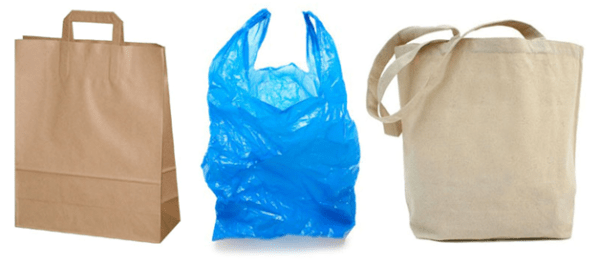
Are you more confused than ever? All three have their pros and cons. Ultimately, it comes down to us being more responsible as a culture. It’s up to each and every one of us as a collective society to be aware of the impact we have on the environment. It’s up to you to realize that you do make a difference. Whatever choice you make, let it be a responsible and educated choice. If you choose reusable bags, remember to bring them and keep them clean. If you use paper or plastic, remember to recycle.
You can bag up that advice, take it home and recycle it by sharing it with others!
We reconfirmed our commitment to more responsible fishing practices for all of the tuna we source for our Crown Prince Natural line of products. Mahachai Marine International (MMP) – our exclusive tuna supplier – is now an International Seafood Sustainability Foundation (ISSF) Participating Company. MMP is the latest tuna processor to join a global coalition of industry, leading scientists and WWF, the world’s leading conservation organization. The organization’s mission is to improve tuna sustainability efforts around the world through science-based improvements, direct industry action, and aggressive advocacy.
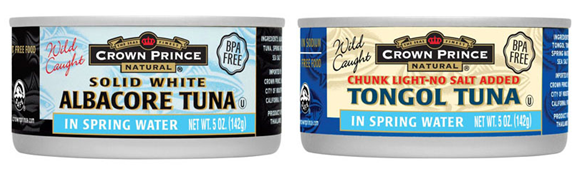
Sustainably harvested tuna a long term goal for Crown Prince
We carry three types of tuna packed under the Crown Prince Natural label: Yellowfin, Albacore, and Tongol. These products are packed in Thailand by seafood packer MMP.
MMP’s participation in ISSF underscores a commitment to supporting fishing vessels that are taking improved steps in order to reduce by-catch, increase transparency through observer coverage, maintain product traceability from point of capture, eliminate illegal fishing and improve access to critical data available to scientists and fishery managers.
For further information on ISSF and its programs visit www.iss-foundation.org.


 Crown Prince Seafood Blog